
The future of health professions education in a digital world
How do you strengthen health professions education across countries, disciplines and digital traditions? At the PEP Symposium in Copenhagen, partners from Denmark, India and Kenya met to share experiences, challenge assumptions and build collaborations for the future of health education in a digital world.
A global partnership with a shared purpose
The Centre for Online and Blended Learning collaborates with international partners to support the development of health professions education. Together with the Department of Public Health, the centre is part of the Partnership for Education of Health Professionals (PEP). The partnership brings together universities and organisations in Denmark, India and Kenya and focuses on shared capacity development. Its overall aim is to strengthen education systems in response to cardiometabolic disease, workforce needs and the reach of education. The work centres on three closely connected areas: the use of digital technologies in education, collaborative educational research, and research into the relationship between education and clinical practice.
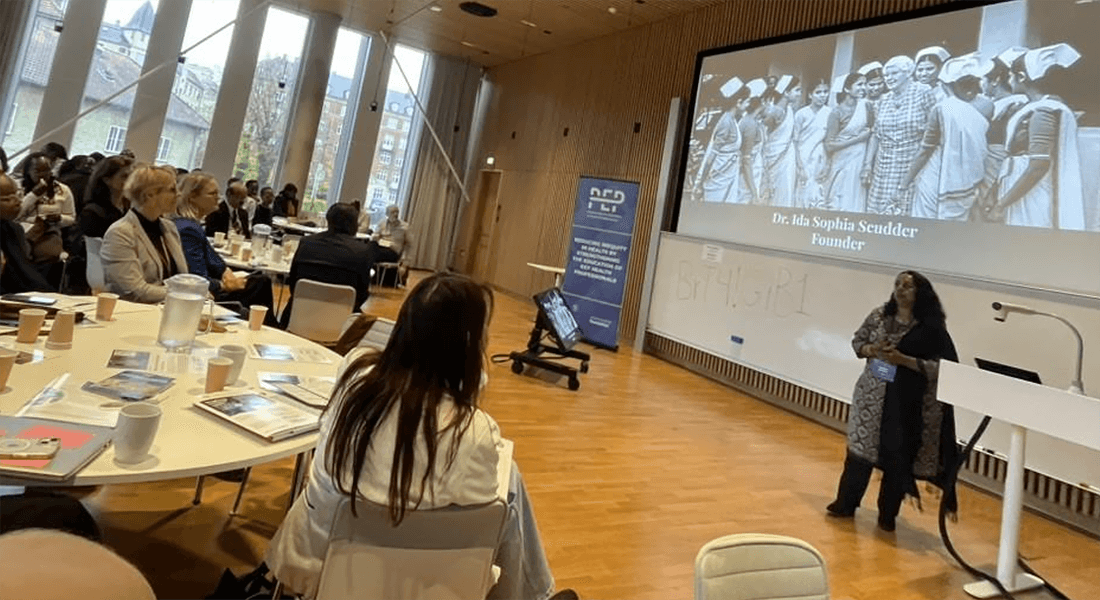
At the end of October, the partnership hosted a two-day symposium at the University of Copenhagen, supported by the Novo Nordisk Foundation. The symposium gathered participants from Denmark, Kenya and India under the theme Strengthening the Quality of Health Professions Education in a Digital World.
Digital perspectives on health professions education
The programme opened with keynote presentations from leading researchers, including Professor Niall Winters from the University of Oxford and Professor Margaret Bearman from Deakin University, who framed discussions on the role of digital technology in health professions education. Throughout the first day, representatives from partner institutions in Kenya, India and Denmark – including Danish university colleges, the Novo Nordisk Foundation and UCPH – shared experiences, challenges and aspirations for the future of health education.
From dialogue to collaboration
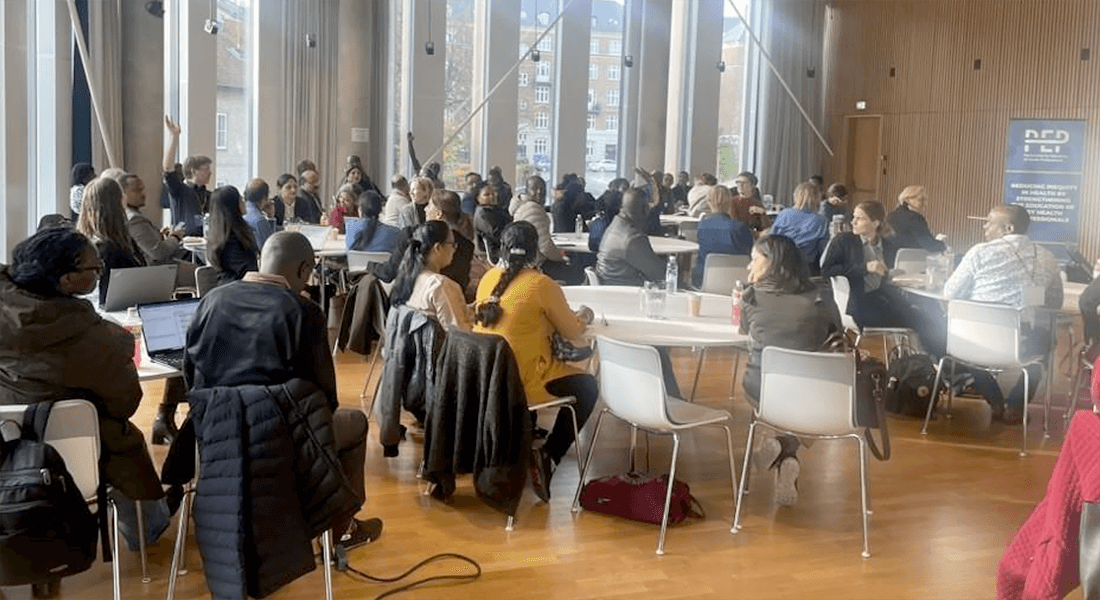
On the second day, participants took the discussions further in interactive Communities of Practice. Here they developed concrete ideas and collaboration plans around themes such as artificial intelligence in education, simulation-based learning, digital teaching competencies and capacity strengthening. The ambition was to establish working groups that would continue beyond the symposium and form a foundation for new projects, research initiatives and shared learning activities.

Building connections that last beyond the symposium
Ahead of the symposium, delegates from Kenya and India, together with Danish colleagues, took part in a series of pre-symposium visits and workshops. These activities offered insight into Danish healthcare and education practices, with visits to institutions such as Steno Diabetes Center Copenhagen, a general practice at Slagelse Hospital, the Centre for Online and Blended Learning at UCPH, and CAMES – the Copenhagen Academy for Medical Education and Simulation. The visits highlighted how education, research and technology intersect to support learning and patient care.
Overall, the symposium was marked by engaged discussions and a strong willingness to learn from one another. It demonstrated how bringing together partners across countries and disciplines can create shared momentum for strengthening health professions education in a digital world.